After my brain injury

After my brain injury
Showing posts with label What is TBI. Show all posts

Wednesday, November 18, 2015

On Brain Health | New Hope for the Damaged Brain

By Tori DeAngelis
May 2013, Vol 44, No. 5
American Psychological Association

Tori DeAngelis is a writer in Syracuse, N.Y.

Brain plasticity — the ability of the brain to renew itself — is a hot research topic for good reason: The Centers for Disease Control and Prevention predicts an epidemic of brain-related health problems as our society ages.

A major cause of such problems is stroke, the fourth leading cause of death in the United States and a major cause of long-term disability.
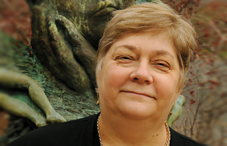
Elissa Newport, cognitive psychologist
Cognitive psychologist Elissa Newport is heading a new center at Georgetown University that promises to bring the best science to bear on the delicate task of stroke recovery.

In a groundbreaking effort to improve people's recovery after one of these devastating events, Georgetown University Medical Center has partnered with MedStar National Rehabilitation Hospital in Washington, D.C., to create the Center for Brain Plasticity and Recovery, which will apply new thinking and state-of-the-art research methods to improve recovery from stroke and, in the future, from other neurological disorders as well.

In July, Georgetown tapped cognitive psychologist Elissa Newport, PhD, of the University of Rochester's department of brain and cognitive sciences to head the new center, a post she assumed with Alexander Dromerick, MD, a Georgetown neurologist and stroke specialist, as its co-director.

"Elissa is an articulate spokesperson for the power of the interdisciplinary approach, and she lives and breathes science in a way that energizes [medical and psychology] students and fellows to pursue their work collaboratively and with great rigor," says Georgetown Medical Center's executive vice president, Howard Federoff, MD, PhD. "I'm confident that in future years, great young trainees will want to be part of the center because of her charisma and leadership."

At the center, scientists from a range of disciplines will study a variety of interventions that have the potential to enhance recovery after stroke, from cellular mechanisms that may facilitate healing to brain stimulation techniques that might optimize brain functioning.

The Monitor on Psychology (May 2013) spoke with Newport about the center's direction, the promise of plasticity research and the importance of interdisciplinary collaboration in addressing a public health problem that is bound to worsen as we face a "silver tsunami" of aging citizens.

How long has brain plasticity work been going on, and why is it vital to the new center's work
Scientists have been interested in brain plasticity since at least the 1930s. Early work suggested that there are critical periods for the development and reorganization of brain function, and showed that the brain's ability to change and learn declines with age. For example, when children experience damage to the left hemisphere, they reorganize language to the right hemisphere, but that no longer happens in adulthood. As a result, we used to think that extensive plasticity was not possible in the adult brain.

But in the last 10 or 15 years, researchers have begun to see evidence of residual plasticity in the adult brain, with a wave of research suggesting that the adult brain can still demonstrate plasticity in structure and function. So now, you see paper after paper in Nature and Science saying that taxi drivers in London have bigger hippocampi than those of other people, or that you can enlarge the areas of the brain dealing with sensory motor control by putting people in experiments where they learn to juggle.

These findings hint that there might be ways to harness such mechanisms after injury or disease — hints that we hope to exploit in our work at the center.

Why is interdisciplinary work so important when studying stroke recovery?
Stroke recovery is a complex process that involves the reduction of injury and the repair of damaged circuits, as well as the restoration or retraining of impaired physical, sensory and cognitive processes.

So it requires the input of many disciplines. One of these disciplines is represented by cellular-molecular people — scientists who study gene expression and cellular-molecular approaches to stimulating the formation of new synapses and circuits.

Then of course there are neurologists, who provide our clinical understanding of stroke and stroke recovery. This group includes pediatric and adult stroke neurologists, as well as neurologists who specialize in rehabilitation medicine and in clinical trials research.

A third group is cognitive neuroscientists, people like me who do basic research on learning, development and memory. We believe that rehabilitation involves many of the same mechanisms that underlie basic learning and memory, so if we understand how to control and enhance learning and memory, we'll also understand how to make rehabilitation work better at the times we need it.

What are some particularly promising directions the center will explore in studying stroke recovery and brain plasticity?
There are a few areas we're very interested in. One is something my colleague Alex Dromerick was already investigating at the National Rehabilitation Hospital that is related to my own interests in "critical periods" — windows of time where the brain shows more plasticity than others. In the case of stroke, the literature suggests there is a short period of time after the event where the brain tries to repair itself through processes such as sprouting new synaptic connections.

We don't know whether these processes are actually functional, but they happen pretty early on after a stroke, usually not at a time when people are well enough to undergo rehabilitation. So one promising direction is to test whether we can catch that very early period using appropriate rehabilitation methods, or, by manipulating the underlying molecular mechanisms, even push those processes to occur later, when patients are better able to work on rehabilitation training.

Several of our scientists, including Peter Turkeltaub, MD, PhD, and Michelle Harris-Love, PhD, are also using brain stimulation techniques to study whether stimulating or inhibiting specific parts of the brain can aid in recovery. In these techniques, you give participants magnetic resonance imaging that provides pictures of their brain and skull, then load the images into software that enables you to direct a stimulator on the skull to very precise areas of the brain.

Read the rest of this inspiring interview about combining stimulation techniques with behavioral training to enhance activity that is relevant to impaired cognitive functions.

Click here:
http://www.apa.org/monitor/2013/05/hope-brain.aspx

Wednesday, November 11, 2015

On Brain Health | Will the Brain Heal Itself after a Severe Brain Injury?


TED TALK |  After a traumatic brain injury, it sometimes happens that the brain can repair itself, building new brain cells to replace damaged ones.

But the repair doesn't happen quickly enough to allow recovery from degenerative conditions like motor neuron disease (also known as Lou Gehrig's disease or ALS).

Siddharthan Chandran, a regenative neurologist, walks through some new techniques using special stem cells that could allow the damaged brain to rebuild faster.  In a related topic, Siddharthan Chandran also explores how to heal damage from degenerative disorders such as MS and motor neuron disease (ALS).

In a TED Talk, Siddharthan Chandran states:

Well, you know what? I think there is hope. 
And there's hope in this next section, of this brain section of somebody else with M.S., because what it illustrates is, amazingly, the brain can repair itself. It just doesn't do it well enough. And so again, there are two things I want to show you. 
First of all is the damage of this patient with M.S. And again, it's another one of these white masses. But crucially, the area that's ringed red highlights an area that is pale blue. But that area that is pale blue was once white. So it was damaged. It's now repaired. 
Just to be clear: It's not because of doctors. It's in spite of doctors, not because of doctors. This is spontaneous repair. It's amazing and it's occurred because there are stem cells in the brain, even, which can enable new myelin, new insulation, to be laid down over the damaged nerves. And this observation is important for two reasons. 
The first is it challenges one of the orthodoxies that we learnt at medical school, or at least I did, admittedly last century, which is that the brain doesn't repair itself, unlike, say, the bone or the liver. But actually it does, but it just doesn't do it well enough. 
And the second thing it does, and it gives us a very clear direction of travel for new therapies -- I mean, you don't need to be a rocket scientist to know what to do here. You simply need to find ways of promoting the endogenous, spontaneous repair that occurs anyway."
See and hear Siddharthan Chandran's 2013 TED Talk by click here:
"Can the Damaged Brain Repair Itself?"


Wednesday, September 30, 2015

Join Brainline.org | 9 Things NOT to Say to Someone with a Brain Injury

Written by Marie Rowland, PhD, EmpowermentAlly
www.brainhealthconsulting.com

Click here: Download Dr. Marie Rowland's article:

Image result for tbi traumatic brain injury


Brain injury is confusing to people who don’t have one. It’s natural to want to say something, to voice an opinion or offer advice, even when we don’t understand.

And when you care for a loved one with a brain injury, it’s easy to get burnt out and say things out of frustration.

Here are a few things you might find yourself saying that are probably not helpful:

1. You seem fine to me.

The invisible signs of a brain injury — memory and concentration problems, fatigue, insomnia, chronic pain, depression, or anxiety — these are sometimes more difficult to live with than visible disabilities. Research shows that having just a scar on the head can help a person with a brain injury feel validated and better understood. Your loved one may look normal, but shrugging off the invisible signs of brain injury is belittling. Consider this: a memory problem can be much more disabling than a limp.

2. Maybe you’re just not trying hard enough (you’re lazy).

Lazy is not the same as apathy (lack of interest, motivation, or emotion). Apathy is a disorder and common after a brain injury. Apathy can often get in the way of rehabilitation and recovery, so it’s important to recognize and treat it. Certain prescription drugs have been shown to reduce apathy. Setting very specific goals might also help.

Do beware of problems that mimic apathy. Depression, fatigue, and chronic pain are common after a brain injury, and can look like (or be combined with) apathy. Side effects of some prescription drugs can also look like apathy. Try to discover the root of the problem, so that you can help advocate for proper treatment.

3. You’re such a grump!

Irritability is one of the most common signs of a brain injury. Irritability could be the direct result of the brain injury, or a side effect of depression, anxiety, chronic pain, sleep disorders, or fatigue. Think of it as a biological grumpiness — it’s not as if your loved one can get some air and come back in a better mood. It can come and go without reason.

It’s hard to live with someone who is grumpy, moody, or angry all the time. Certain prescription drugs, supplements, changes in diet, or therapy that focuses on adjustment and coping skills can all help to reduce irritability.

4. How many times do I have to tell you?

It’s frustrating to repeat yourself over and over, but almost everyone who has a brain injury will experience some memory problems. Instead of pointing out a deficit, try finding a solution. Make the task easier. Create a routine. Install a memo board in the kitchen. Also, remember that language isn’t always verbal. “I’ve already told you this” comes through loud and clear just by facial expression.

5. Do you have any idea how much I do for you?

Your loved one probably knows how much you do, and feels incredibly guilty about it. It’s also possible that your loved one has no clue, and may never understand. This can be due to problems with awareness, memory, or apathy — all of which can be a direct result of a brain injury. You do need to unload your burden on someone, just let that someone be a good friend or a counselor.

6. Your problem is all the medications you take.

Prescription drugs can cause all kinds of side effects such as sluggishness, insomnia, memory problems, mania, sexual dysfunction, or weight gain — just to name a few. Someone with a brain injury is especially sensitive to these effects. But, if you blame everything on the effects of drugs, two things could happen. One, you might be encouraging your loved one to stop taking an important drug prematurely. Two, you might be overlooking a genuine sign of brain injury.

It’s a good idea to regularly review prescription drugs with a doctor. Don’t be afraid to ask about alternatives that might reduce side effects. At some point in recovery, it might very well be the right time to taper off a drug. But, you won’t know this without regular follow-up.

7. Let me do that for you.

Independence and control are two of the most important things lost after a brain injury. Yes, it may be easier to do things for your loved one. Yes, it may be less frustrating. But, encouraging your loved one to do things on their own will help promote self-esteem, confidence, and quality of living. It can also help the brain recover faster.

Do make sure that the task isn’t one that might put your loved one at genuine risk — such as driving too soon or managing medication when there are significant memory problems.

8. Try to think positively.

That’s easier said than done for many people, and even harder for someone with a brain injury. Repetitive negative thinking is called rumination, and it can be common after a brain injury. Rumination is usually related to depression or anxiety, and so treating those problems may help break the negative thinking cycle.

Furthermore, if you tell someone to stop thinking about a certain negative thought, that thought will just be pushed further towards the front of the mind (literally, to the prefrontal cortex). Instead, find a task that is especially enjoyable for your loved one. It will help to distract from negative thinking, and release chemicals that promote more positive thoughts.

9. You’re lucky to be alive.

This sounds like positive thinking, looking on the bright side of things. But be careful. A person with a brain injury is six times more likely to have suicidal thoughts than someone without a brain injury. Some may not feel very lucky to be alive. Instead of calling it “luck,” talk about how strong, persistent, or heroic the person is for getting through their ordeal. Tell them that they’re awesome.

Saturday, September 19, 2015

Let's Be Social | Google+ Post You May Like From #TBIAffectedMe

GOOGLE+   In the interest of bringing greater awareness to Traumatic Brain Injury (also known as intracranial injury), an image post by a G+ site called "TBI Support for Family and Caregivers" caught our eye.  Scroll down and check out the informative post.

It's a very personal G+ site maintained by Pamela Guerin who works at BayShore Agency and lives in New Gretna, New Jersey.  The site tracks her work with family and caregivers of persons struck by TBI.  It also informs.  For example, one post explains that 
TBI "occurs when an external force traumatically injures the brain. TBI can be classified based on severity, mechanism, or other features. Head injury usually refers to TBI, but is a broader category because it can involve damage to structures other than the brain, such as the scalp and skull (from en.wikipedia.org).
Without a doubt, "TBI Support for Family and Caregivers" cares very much.  

This past March 2015 — which was Brain Injury Awareness Month — the site offered this fine post:
To honor our friends, supporters, and all the remarkable survivors of brain injury, we are launching the #TBIaffectedme campaign!  Our goal is to encourage those affected by brain injury, whether directly or indirectly, to share their stories using #TBIaffectedme. 
By taking part in our campaign, you can unite with the thousands of New Jerseyans living with brain injury and their families who are taking action to ensure their voices are heard.  We would welcome your support! 
Do consider joining this #TBIaffectedme Twitter campaign, if you like. After all, this advocacy project began because TBI did affect us who are participants of Mount Sinai Hospital's Bridge and Phase 2 programs. —tbi advocate  

Monday, August 17, 2015

Cure for TBI | FDA Gives Thumbs Up to BrainScope Device

NEW YORK CITY |   Can a second-generation system offer an objective assessment of mildly-presenting head trauma patients?  It seems quite possible when this system uses commercial smartphone technology.

BrainScope Company, Inc. announced today that the United States Food and Drug Administration (FDA) has cleared the company’s Ahead 200 device.

Using commercial smartphone hardware that employs Google’s Android operating system, the Ahead 200 records and analyzes a patient’s electroencephalograph (EEG) using a custom sensor attached to the handheld to provide an interpretation of the structural condition of the patient’s brain after head injury.

In late 2012, BrainScope announced that it had been awarded a $2.67 million contract by the United States Army for development of the Ahead 200, a smaller, more rugged and modernized version of its Ahead 100 traumatic brain injury assessment technology.

Similar to the Ahead 100, which was cleared this past November, it is indicated for use as an adjunct to standard clinical practice to aid in the evaluation of patients who are being considered for a head Computerized Tomography (CT) scan, but should not be used as a substitute for a CT scan. It is to be used on patients who sustained a closed head injury within 24 hours, clinically present as a mild traumatic brain injury (TBI), and are between the ages of 18-80 years.

“We are particularly grateful for the strong, continuing partnership with the Department of Defense,” stated Michael Singer, President and CEO of BrainScope. “FDA Clearance of our Ahead 200 represents a significant achievement in BrainScope’s mission to develop an objective, non-invasive, patient-friendly assessment device for rapid and easy use in urgent care settings. A device with the ability to rapidly identify and categorize patients who present with mild symptoms but who may have a life-threatening TBI has the potential to improve triage, save lives, reduce radiation exposure and decrease costs to the healthcare system.”

In September 2014, BrainScope announced that it had been awarded three contracts valued at $15.93 million by the United States Department of Defense for continued research and development of the Ahead system.

These contracts support enhancement of BrainScope’s Ahead technology and current nationwide, multi-site clinical studies in hospital Emergency Rooms, and extend its TBI focus to concussion assessment technology. Studies in concussed athletes are underway in cooperation with university sports programs. These activities leverage six years of BrainScope studies in sports venues, including a study awarded through the GE-NFL Head Health Challenge I.

“The Ahead 200 project in collaboration with the U.S. Department of Defense has culminated in another important FDA Clearance and has allowed us to leverage the ubiquitous Android mobile operating system and advances in handheld processing technology fueled by the smartphone market to develop and ultimately commercialize our products. We continue to refine the ultimate product through our ongoing clinical studies and technology development,” stated Singer.

Results from independent clinical studies utilizing BrainScope’s technology have been published through 15 articles in leading peer-reviewed neurotrauma and emergency medicine journals such as Journal of Neurotrauma, Brain Injury, Academic Emergency Medicine, Journal of Head Trauma Rehabilitation, The American Journal of Emergency Medicine, and Military Medicine.

BrainScope holds 86 issued and pending patents related to its technology.

BrainScope has been awarded more than $27 million of U.S. Department of Defense research contracts for the development of its TBI assessment technology and has received significant funding from private investors to accelerate its development efforts.

About BrainScope

Backed by Revolution (created by AOL co-founder Steve Case), Shaman Ventures, ZG Ventures, State of Maryland Venture Fund, Brain Trust Accelerator Fund, and Difference Capital, BrainScope is a medical neurotechnology company that is developing a new generation of hand-held, easy-to-use, non-invasive instruments designed to aid medical professionals in rapidly and objectively assessing TBI.

BrainScope devices in development are based on a proprietary technology platform, which integrates databases of brainwave recordings with advanced digital signal processing, sophisticated algorithms, miniaturized hardware and disposable headset sensors. BrainScope's unique devices are being created to meet a long-standing clinical need for improved early identification, staging and triage of head injured patients. BrainScope devices under development, including the Ahead 300 and the Ahead Concussion Assessment System, for assessment of traumatically-induced structural head injury and concussion are for investigational use only. For more information, please visit www.brainscope.com.

View source version on businesswire.com: http://www.businesswire.com/news/home/20150518006746/en/

Saturday, August 15, 2015

Brain Injury Association | No Two Brain Injuries Are the Same


Image result for Brain Injuries Do Not Discriminate

"Since anyone can sustain a brain injury at any time, it is important for everyone to have access to comprehensive rehabilitation and ongoing disease management. Doing so eases medical complications, permanent disability, family dysfunction, job loss, homelessness, impoverishment, medical indigence, suicide and involvement with the criminal or juvenile justice system. Access to early, comprehensive treatment for brain injury also alleviates the burden of long term care that is transferred to tax payers at the federal state and local levels."
Dr. Brent Masel, National Medical Director
for the Brain Injury Association of America


Wednesday, July 1, 2015

Understanding TBI | Bridge Advocacy Project

An Advocacy Project
By 2014–2015 Class of Bridge Program at Mount Sinai Hospital Rehab Center

NEW YORK CITY — Participants of the 2014–2015 Bridge Program at Mount Sinai Hospital's Rehabilitation Center were given the task of creating and producing an Advocacy Project that would raise the public's awareness of TBI (Traumatic Brain Injury).

Since these participants are affected by TBI, they put their heads together to come up with a board presentation that would be featured on the Rehab Center's hallway, which is located at 5 East 102nd Street in East Harlem.  This TBI Advocacy Project began in November 2014 and was completed in May 2015. It involved heavy research.

All of these Bridge participants are outpatients and affected TBI.  They entitled the board project as "Understanding TBI."  Keep revisiting this blog to see posts that feature sections of the project. Ultimately, you will see the entire TBI Advocacy Project board.  

These industrious Bridge participants look forward to hearing — and learning about —your reactions to their TBI Advocacy Project. 


Tuesday, June 30, 2015

Understanding TBI | How Does Brain Injury Affect Families?

An Advocacy Project
By 2014–2015 Class of Bridge Program at Mount Sinai Hospital Rehab Center

NEW YORK CITY — Participants of the 2014–2015 Bridge Program at Mount Sinai Hospital's Rehabilitation Center were given the task of creating and producing an Advocacy Project that would raise the public's awareness of TBI (Traumatic Brain Injury).

Since these participants are affected by TBI, they put their heads together to come up with a board presentation that would be featured on the Rehab Center's hallway, which is located at 5 East 102nd Street in East Harlem.  This TBI Advocacy Project began in November 2014 and was completed in May 2015. It involved heavy research.

All of these Bridge participants are outpatients and affected TBI.  They entitled the board project as "Understanding TBI."  Keep revisiting this blog to see posts that feature sections of the project. Ultimately, you will see the entire TBI Advocacy Project board.  

These industrious Bridge participants look forward to hearing — and learning about —your reactions to their TBI Advocacy Project. 


HOW DOES BRAIN INJURY AFFECT FAMILY MEMBERS?


For most family members, life is not the same after a TBI.  You are not alone in what you are feeling.


Some family and friends don't understand what you are feeling on a daily basis.

Some people experience a great deal of stress after their injury.

Ways to reduce stress can go on for a long time and can have a negative affect on the human body.

Prolonged stress can lead to depression and/or anxiety.

Learn how to relax.

Take a few moments.

There are a number of ways that you can reduce stress. 

Take a few moments for yourself.

Exercise regularly.

Participate in support groups.

Changing roles with the family.

Try to maintain a sense of humor.

Sunday, June 21, 2015

Understanding TBI | What Is Traumatic Brain Injury?

An Advocacy Project
By 2014–2015 Class of Bridge Program at Mount Sinai Hospital Rehab Center


NEW YORK CITY — Participants of the 2014–2015 Bridge Program at Mount Sinai Hospital's Rehabilitation Center were given the task of creating and producing an Advocacy Project that would raise the public's awareness of TBI (Traumatic Brain Injury).

Since these participants are affected by TBI, they put their heads together to come up with a board presentation that would be featured on the Rehab Center's hallway, which is located at 5 East 102nd Street in East Harlem.  This TBI Advocacy Project began in November 2014 and was completed in May 2015. It involved heavy research.

All of these Bridge participants are outpatients and affected TBI.  They entitled the board project as "Understanding TBI."  Keep revisiting this blog to see posts that feature sections of the project. Ultimately, you will see the entire TBI Advocacy Project board.  

These industrious Bridge participants look forward to hearing — and learning about —your reactions to their TBI Advocacy Project. 


*****


TBI or Traumatic Brain Injury  —  It is a form of acquired brain injury which occurs when sudden TRAUMA causes damage to the brain.


TRAUMATIC BRAIN INJURIES can be open or closed head injury.

  • Open head injuries: These injuries result when an object penetrates the skull/ enters the brain and causes damage to specific areas. (i.e., a bullet enters the brain)
  • Closed head injuries: These injuries result from a blow to the head. There is no penetration of the skull (i.e., if your head strikes against the dashboard in a car accident)